
What to Consider When Planning Transitional Interior Design
Transitional interiors bring together the warmth of traditional design and the clean simplicity of contemporary style. The result is a balanced look that feels current without becoming overly trendy or stark. Planning this type of space requires thoughtful decisions about color, furniture, texture, lighting, and decorative details so that neither side of the design feels dominant. When these elements are carefully coordinated, transitional interior design can create rooms that feel polished, comfortable, and adaptable to changing tastes.
A successful plan also depends on considering how the space will be used from day to day. Beautiful rooms still need to support practical needs, including storage, traffic flow, seating, and durability. By making those functional decisions early, homeowners can develop a cohesive design that looks refined while remaining easy to live in.
Balance Traditional and Contemporary Elements
One of the most important goals of transitional interior design is creating an intentional balance between classic and modern features. Traditional elements may include upholstered furniture with familiar silhouettes, wood finishes, decorative molding, or subtle architectural details. Contemporary influences can appear through streamlined furniture, simpler accessories, cleaner lines, and restrained color choices.
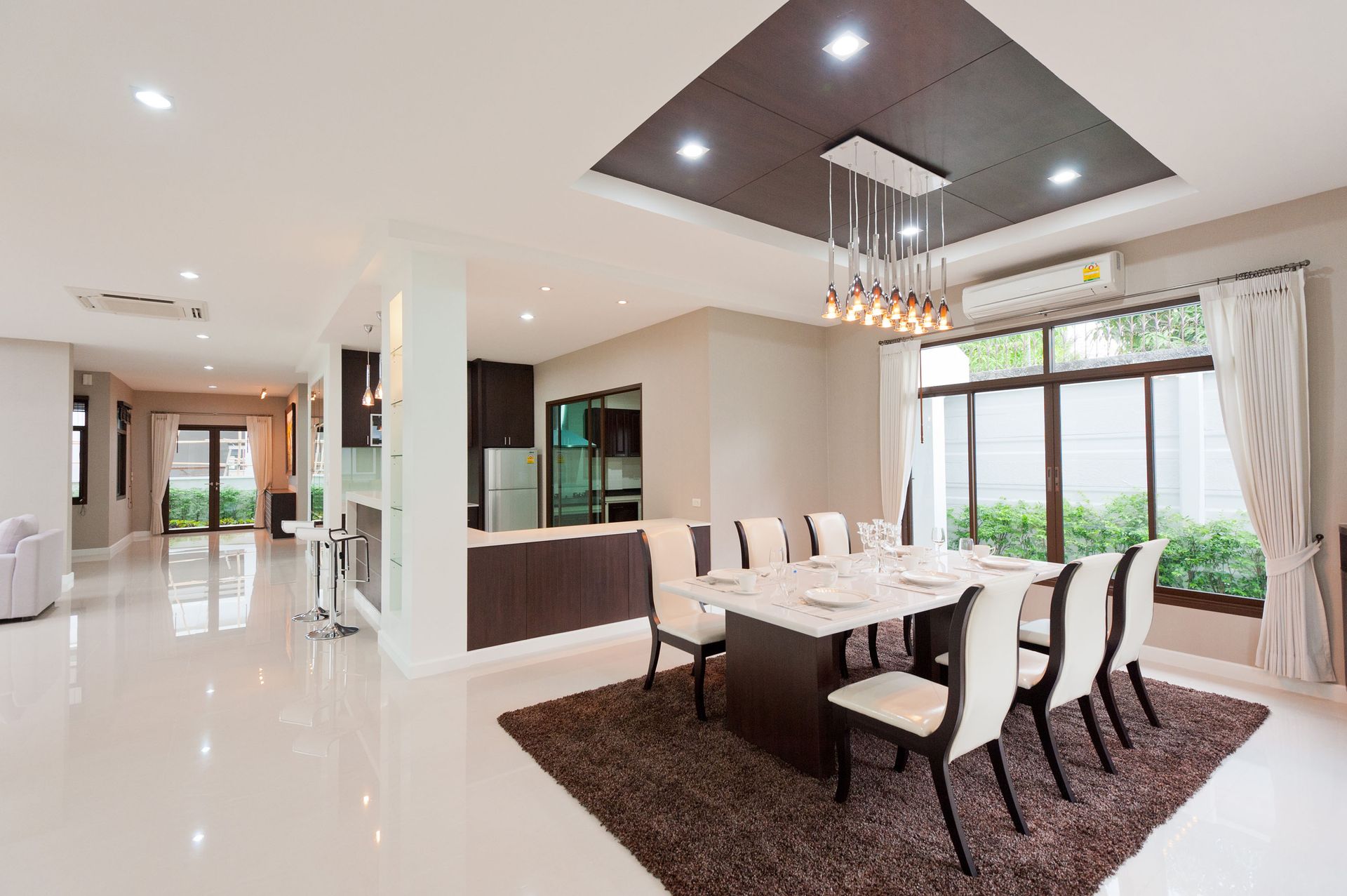
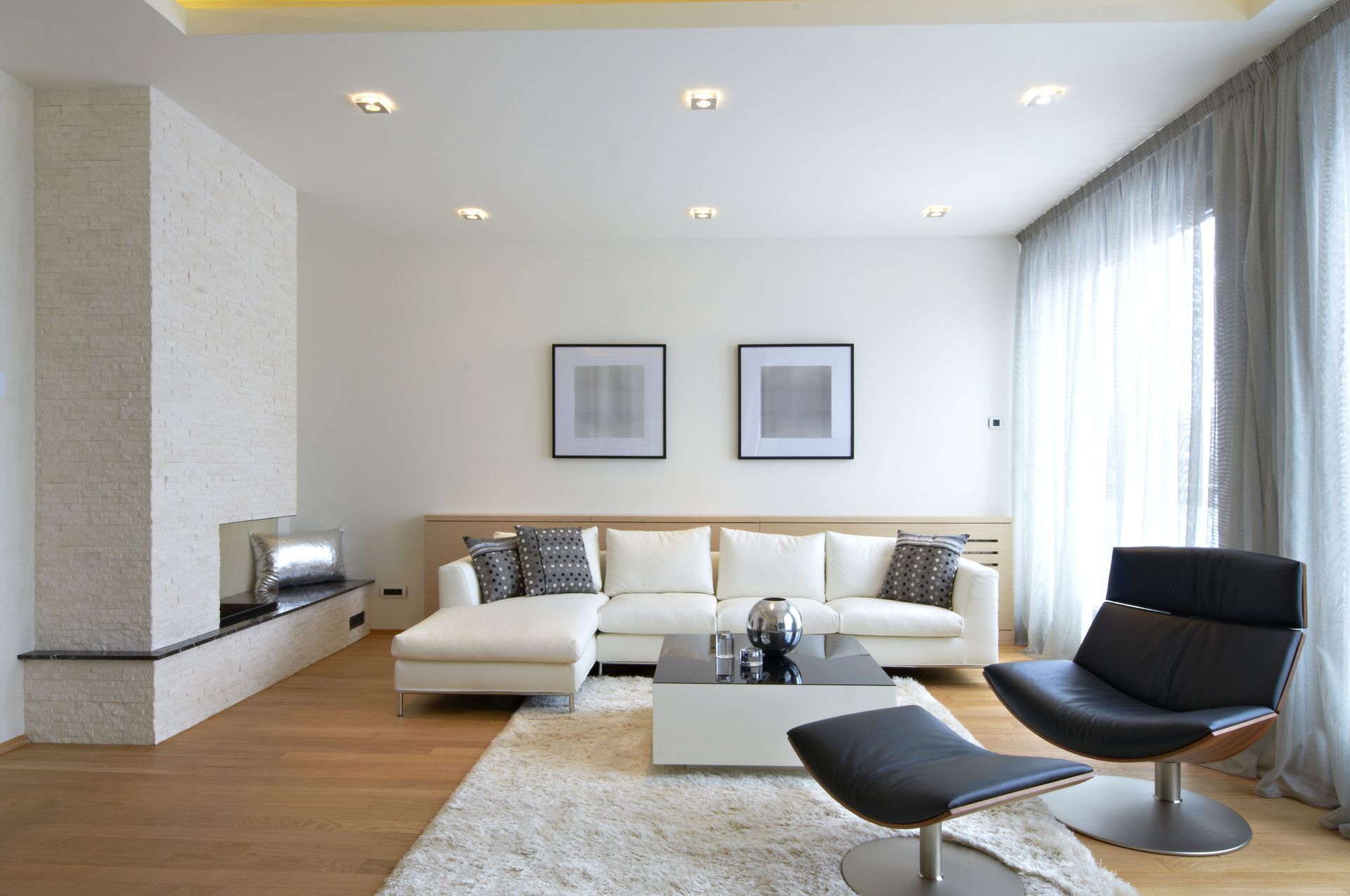
The key is avoiding a room that looks divided between two competing styles. Instead of placing distinctly traditional furniture on one side and very modern pieces on the other, look for items that share compatible proportions, finishes, or visual weight. For example, a classic sofa can feel more current when paired with a simple metal coffee table, while a modern dining table can gain warmth from upholstered chairs with gentle curves. Repeating related materials throughout the room also helps connect different design influences.
Choose a Calm and Flexible Color Palette
Color plays a major role in establishing the understated character associated with transitional interior design. Neutral shades such as warm white, beige, taupe, gray, cream, and soft brown are often used as a foundation because they allow furniture, artwork, and architectural features to stand out without creating visual competition.
A neutral palette does not need to feel flat. Varying undertones and degrees of warmth can add subtle depth, while muted accent colors can introduce personality. Soft blues, greens, terracotta tones, or deeper charcoal shades may work well when used selectively. Homeowners should also consider how natural and artificial light affect colors throughout the day. Testing paint samples in different areas of the room can help prevent unexpected shifts in tone and make it easier to coordinate walls with flooring, textiles, and furnishings.
Select Furniture With Clean, Comfortable Shapes
Furniture choices have a strong influence on whether a transitional space feels balanced or overly formal. Pieces should generally have clean profiles, comfortable proportions, and enough detail to create interest without looking ornate. This approach helps transitional interior design maintain a relaxed appearance while still feeling carefully composed.
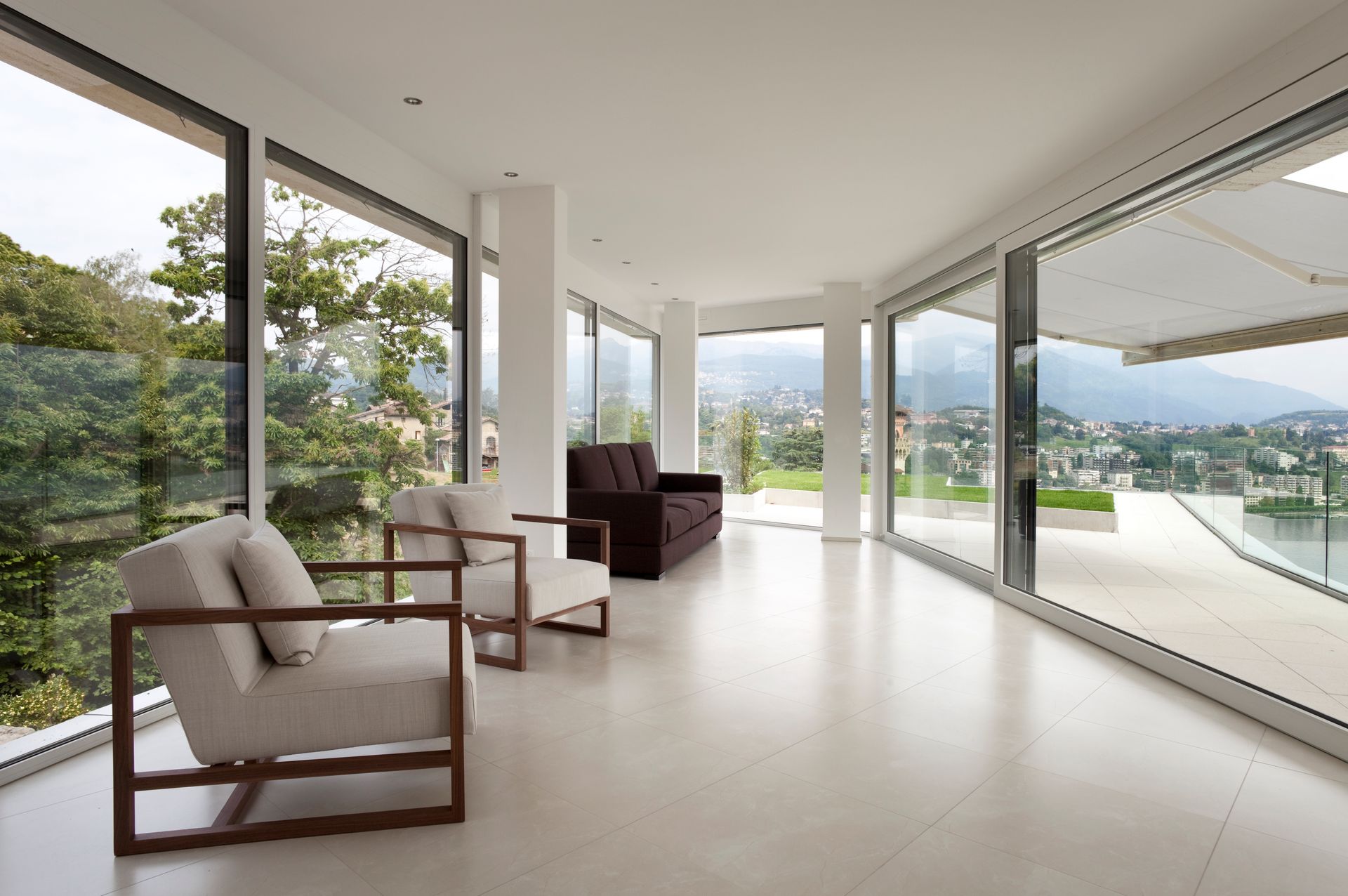
Consider mixing furniture with different but compatible shapes rather than purchasing a completely matched set. A gently curved armchair can soften the straight lines of a contemporary sofa, while a traditional wood console can add warmth near a more minimal seating arrangement. Scale is also important. Oversized furniture can make a room feel crowded, while pieces that are too small may appear disconnected. Measuring the room and planning walking paths before purchasing furniture can help create a layout that supports both visual balance and everyday comfort.
Layer Texture Without Creating Visual Clutter
Texture is especially useful in rooms where the color palette is restrained. Materials such as linen, wool, leather, wood, stone, glass, and metal can add dimension without requiring bold patterns or dramatic color changes. In transitional interior design, these textures often work best when they are repeated in subtle ways across the room.
For example, a woven rug can complement linen drapery, while wood furniture can connect visually with flooring or decorative accents. Soft upholstery can be balanced with smoother surfaces such as glass or polished metal. Decorative objects should also be arranged with care. According to The Spruce, the ‘3-5-7 rule’ of interior design suggests that objects tend to look more visually appealing when arranged in odd-numbered groups. Using this principle on shelves, tables, or consoles can help create displays that feel intentional without appearing overly symmetrical or crowded.
Plan Lighting for Function and Atmosphere
Lighting should be planned as part of the overall design rather than treated as a finishing detail. Transitional interior design often benefits from layered lighting that combines ambient, task, and accent sources. This creates flexibility while helping different areas of the room serve their intended purposes.
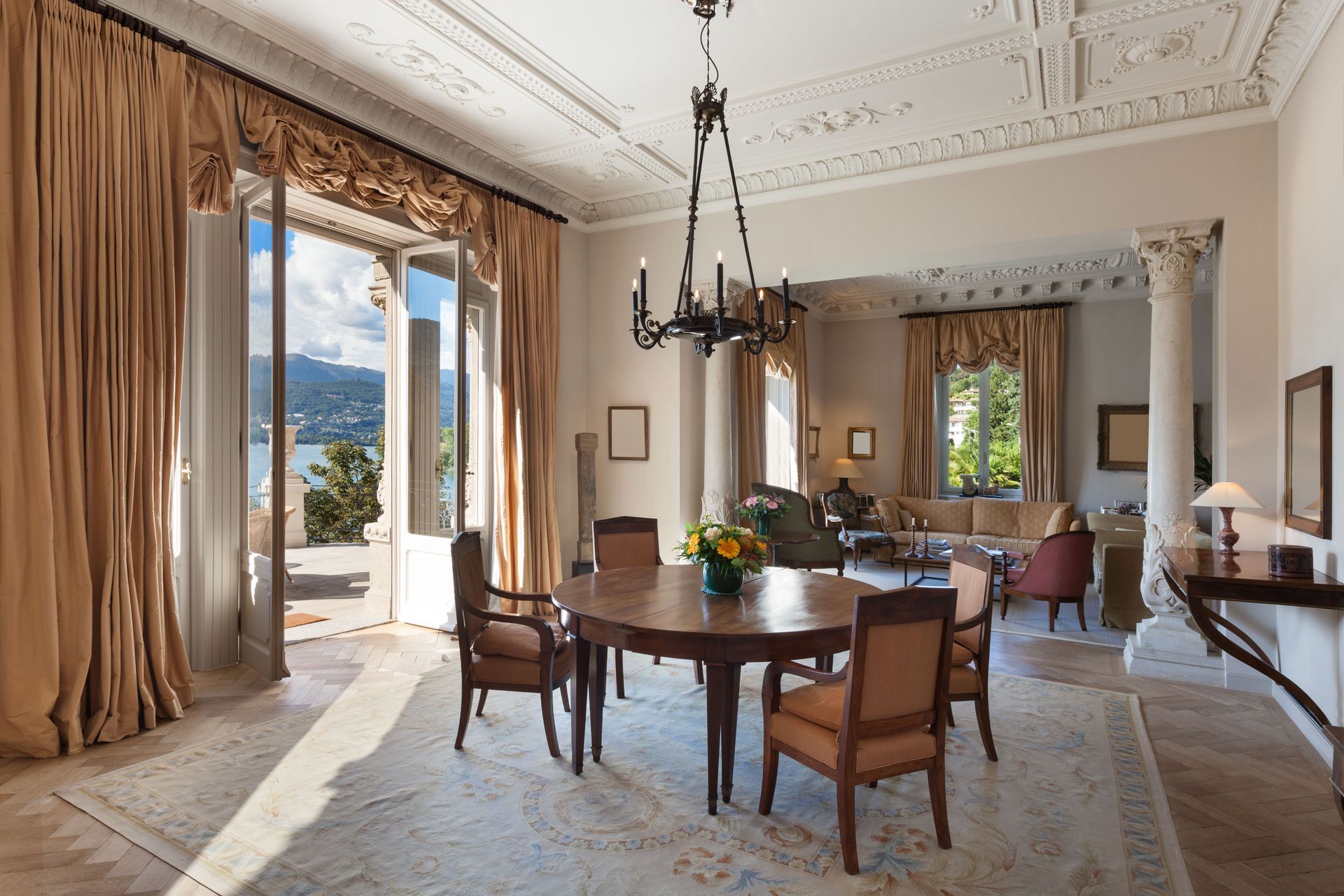
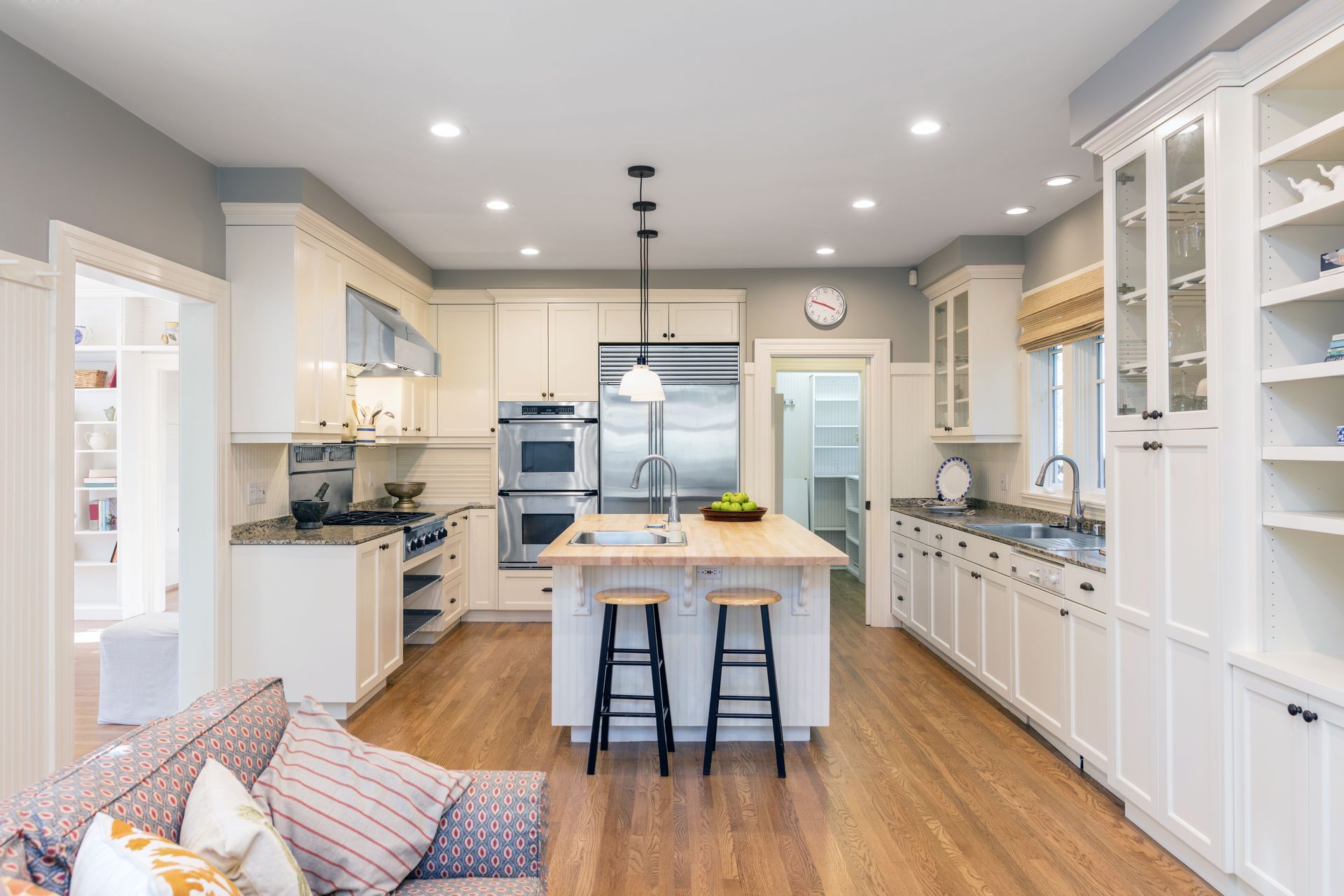
Overhead fixtures can provide general illumination, while table lamps, floor lamps, under-cabinet lighting, and wall sconces add targeted light where it is needed. Decorative fixtures can also bridge traditional and contemporary influences. A chandelier with a familiar shape but simplified detailing, for example, can work well in a transitional dining room. Homeowners should also consider bulb temperature, fixture scale, and dimming controls. Consistent light temperatures can make the room feel more cohesive, while dimmers allow the atmosphere to change between everyday activities, entertaining, and quiet evenings.
Use Patterns and Accessories With Restraint
Patterns and decorative accessories give a room personality, but restraint is important when planning transitional interior design. Large amounts of ornate patterning can push the space toward a more traditional look, while very sparse decoration can make it feel too minimal. A better approach is to use a limited number of patterns and repeat related colors or shapes throughout the room.
Geometric prints, subtle stripes, understated florals, and textured solids can all work well when their scale and colors complement one another. Artwork should also support the overall palette and proportions of the room rather than simply filling empty wall space. Accessories such as trays, vases, books, mirrors, and sculptural objects can provide finishing details, but leaving some open space helps each item have greater visual impact. To maintain cohesion, it helps to edit accessories periodically and remove items that no longer serve a purpose or aesthetic role. Layering should be intentional, with each object contributing to the overall composition rather than competing for attention. Varying height, scale, and material can also create subtle rhythm across surfaces.
Design for Long-Term Flexibility and Daily Living
A strong transitional plan should feel adaptable enough to evolve as needs and preferences change. Because the style already combines classic and current elements, homeowners can often update a room by replacing smaller features rather than redesigning the entire space. Changing pillows, artwork, lighting, rugs, or accent furniture can refresh transitional interior design while preserving the larger investment in flooring, cabinetry, and major furnishings.
Practical considerations should remain part of every decision. Families with children or pets may benefit from durable upholstery, washable rugs, rounded furniture edges, and storage that keeps frequently used items accessible. Rooms used for entertaining may need flexible seating or surfaces that can serve several purposes. Considering these needs during the planning stage helps prevent a finished space from looking attractive but functioning poorly.
Coordinating traditional and contemporary influences, using a flexible color palette, selecting appropriately scaled furniture, layering texture, planning lighting, and limiting unnecessary decoration can create a home that feels cohesive without appearing rigid. Transitional interior design offers enough structure to guide major decisions while still leaving room for personal preferences and future updates. Careful planning can make the finished space feel comfortable, polished, and practical for everyday life. Call Main Line Design today to schedule your interior design consultation.
Share On: